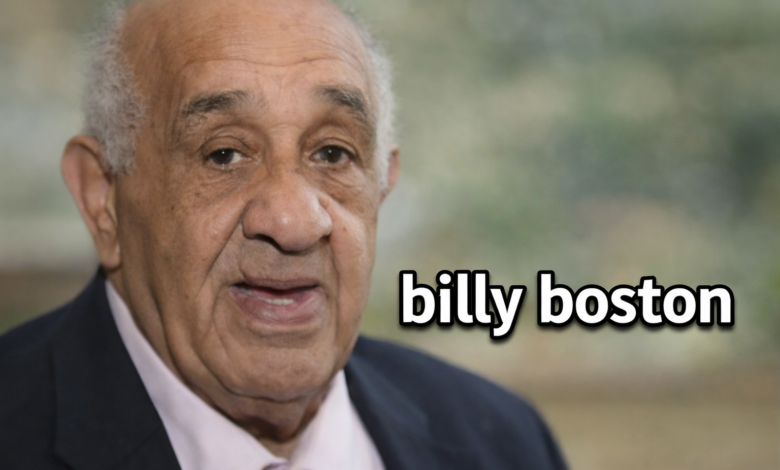
Billy Boston: A Rugby Legend Who Redefined the Game and Inspired Generations

Introduction
Billy Boston is a name synonymous with rugby league excellence. Born in Cardiff, Wales, Boston went on to become a towering figure in the sport, breaking barriers and setting records that would stand the test of time. His story is not just one of athletic prowess but also of resilience, trailblazing through a landscape that was often inhospitable to players of his background. Boston’s remarkable journey from the streets of Tiger Bay to rugby league immortality is an inspiring testament to hard work, dedication, and the transformative power of sport.
Through his career, Billy Boston became a symbol of perseverance and excellence, not only achieving unparalleled success on the field but also laying the groundwork for future generations of rugby players from diverse backgrounds. His impact transcends the game, as his influence remains an integral part of rugby league’s cultural and historical fabric.
Quick Bio
| Attribute | Details |
|---|---|
| Full Name | Sir William John Boston |
| Date of Birth | 6th August 1934 |
| Birthplace | Cardiff, Wales |
| Nationality | Welsh / British |
| Ethnicity | Mixed (Father from Sierra Leone, mother of Welsh descent) |
| Height | N/A |
| Weight | N/A |
| Position | Winger / Centre |
| Professional Career | 1953 – 1970 |
| Club | Wigan, Blackpool Borough |
| International Career | Great Britain (31 Test Caps) |
| Notable Achievements | Rugby League World Cup Winner (1960), First non-white player in Great Britain team (1954), MBE (1996), KBE (2025) |
| Legacy | Rugby League Hall of Fame Inductee, Statues in Wigan and Cardiff |
Early Life and Career Beginnings
Billy Boston’s story began in the heart of Cardiff’s Tiger Bay, a multicultural district known for its bustling docks and diverse population. Born into a family of 11 children, Billy was exposed to a life full of challenges, but his natural talent for sports set him apart early on. His father, a merchant seaman from Sierra Leone, and his mother, of Irish descent, raised their children in an environment where resilience and community were central.
Billy started playing rugby union at a young age, representing Cardiff Schools and later playing for clubs like Neath RFC. However, his true calling came when he made the bold decision to transition to rugby league, a decision that would eventually change the course of his life and the history of the sport.
A Career in Rugby League: Achievements and Triumphs
Billy Boston’s rugby league career began in 1953 when he signed with Wigan, marking the start of an extraordinary 15-season tenure with the club. His time at Wigan was marked by triumph, as he quickly established himself as one of the most dangerous wingers in the game. Over 488 appearances for the club, Boston scored an impressive 478 tries, a club record that still stands today. This achievement cemented his place in Wigan’s history and rugby league folklore.
Boston’s career wasn’t just about individual records; he also led his team to numerous victories, including Challenge Cups and Championships. His speed, power, and agility made him a formidable force on the field, and he became renowned for his uncanny ability to finish tries in even the most difficult of situations. He finished his career with Blackpool Borough in 1970, but his legacy was far from over.
International Glory and Groundbreaking Achievements
Billy Boston was a cornerstone of Great Britain’s rugby league team, earning 31 Test caps and scoring 24 tries during his international career. His achievements on the world stage included playing in three Lions tours to Australia and New Zealand, where he became the first non-white player to represent Great Britain in 1954. This was a significant moment in rugby league history, breaking down racial barriers in a sport that had long been dominated by white players.
In 1960, Boston was part of the Great Britain team that won the Rugby League World Cup, a crowning achievement that elevated him to the status of a national hero. His performances for his country earned him widespread recognition, and his impact went far beyond the rugby field.
Honours and Legacy: A Trailblazer for Future Generations
Boston’s legacy is marked not just by the records he set, but also by the path he forged for future generations of players. His breaking of racial barriers in the 1950s and 1960s paved the way for players of diverse backgrounds to enter rugby league. He was later inducted into the Rugby League Hall of Fame and the Welsh Sports Hall of Fame, where he stands as a testament to the power of sport in promoting social change.
In recognition of his services to rugby and his contributions to society, Billy Boston was awarded the Member of the Order of the British Empire (MBE) in 1996. However, the pinnacle of his accolades came in 2025, when he was knighted with the Knight Bachelor (KBE), becoming the first rugby league player to receive such an honour. His statue stands in both Wigan and Cardiff, symbolizing his lasting influence on the sport and the world.
Conclusion
Billy Boston’s story is one of triumph, resilience, and historical significance. From his early days in Cardiff to becoming a legend at Wigan and a trailblazer for diversity in sport, Boston’s journey has left an indelible mark on rugby league. His legacy as a player, icon, and pioneer continues to inspire generations, and his accolades only scratch the surface of the impact he has had on the world of sport and beyond. As rugby league continues to evolve, the name Billy Boston will forever remain synonymous with excellence and integrity.
FAQ
1. Who is Billy Boston?
Billy Boston is a former rugby league player from Cardiff, Wales, regarded as one of the greatest players in rugby league history. He played for Wigan and Blackpool Borough and represented Great Britain in international competitions.
2. What are Billy Boston’s major achievements?
Billy Boston’s major achievements include winning the Rugby League World Cup in 1960, setting a club record of 478 tries for Wigan, and being the first non-white player to represent Great Britain in 1954. He was knighted in 2025 for his services to rugby league.
3. What legacy has Billy Boston left behind?
Billy Boston’s legacy includes breaking racial barriers in rugby league, setting records that still stand, and being a prominent figure in rugby’s history. His influence extends beyond sport, inspiring future generations of players from diverse backgrounds.
4. Where is Billy Boston’s statue located?
Billy Boston’s statue stands in Wigan and Cardiff Bay, celebrating his extraordinary contributions to rugby league and his pioneering role in breaking down racial barriers in the sport.
5. How many tries did Billy Boston score in his career?
Billy Boston scored a total of 571 tries in his career, with 478 of those coming during his time at Wigan. This remains the second-highest total in rugby league history.