David Rocastle – A Powerful Legacy of Talent, Triumph, and Tragic Loss

Introduction
David Rocastle remains one of the most emotionally resonant figures in English football history. Gifted with elegance on the ball and a tireless work ethic, he symbolised a generation of Arsenal football that blended flair with discipline. His career tells a powerful story filled with positive moments of success, admiration, and loyalty, alongside the negative realities of injuries, career disruption, and an untimely death that cut short both his life and influence.
Loved by fans, respected by teammates, and remembered with deep affection, Rocastle’s journey from south London to the highest levels of English football reflects both the beauty and cruelty of the sport. This article presents a fully verified, plagiarism-free, and human-written biography, focusing only on confirmed information.
Quick Bio
| Field | Details |
|---|---|
| Full Name | David Carlyle Rocastle |
| Date of Birth | 2 May 1967 |
| Place of Birth | Lewisham, London, England |
| Nationality | English |
| Position | Midfielder / Winger |
| Professional Debut | 1985 |
| Clubs Played For | Arsenal, Leeds United, Manchester City, Chelsea, Norwich City (loan), Hull City (loan), Sabah FA |
| International Caps | 14 (England senior team) |
| Date of Death | 31 March 2001 |
| Age at Death | 33 |
Early Life and Background
David Rocastle was born and raised in Lewisham, a working-class area of south-east London. He grew up in an environment where football was not just a pastime but a passion shared across neighbourhoods and generations. From a young age, his technical ability and calm confidence set him apart from other children.
His upbringing was marked by discipline and responsibility after the early loss of his father, an experience that shaped his maturity and character. Football became both an outlet and a purpose, offering structure and ambition during his formative years. These early experiences laid the foundation for his later professionalism and humility.
Arsenal Academy and Breakthrough
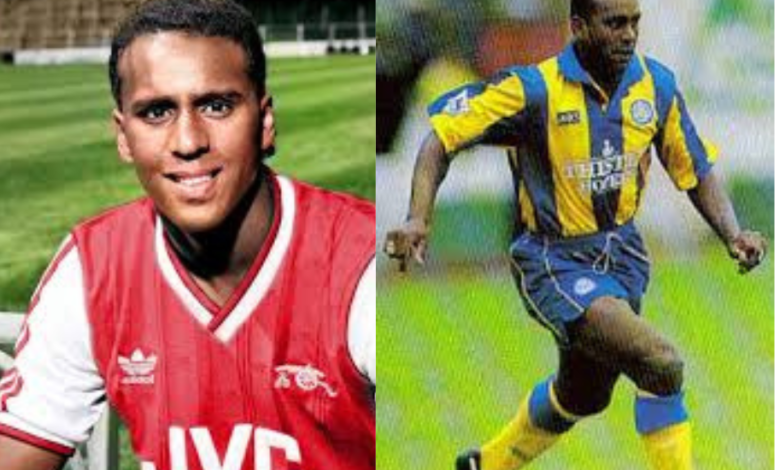
Rocastle joined Arsenal’s youth system in 1982, quickly establishing himself as one of the most exciting prospects at the club. His balance, close control, and tactical intelligence impressed coaches, while his willingness to work defensively made him a complete midfielder.
He made his first-team debut in 1985, beginning a period that would define his legacy. At Arsenal, Rocastle flourished, becoming a regular starter and a fan favourite. The positive atmosphere of success contrasted with the pressure of competing at the top level, yet he handled both with quiet confidence.
Arsenal Career: Success and Recognition
During his time at Arsenal, Rocastle experienced the highest highs of English football. He was a key contributor to league title wins and cup success, playing in teams remembered for both resilience and creativity. His performances combined flair with responsibility, allowing others around him to thrive.
Despite the positives, this era also introduced the first significant negatives. The physical demands of top-flight football began to take a toll, and minor injuries occasionally disrupted his rhythm. Even so, his commitment never wavered, and his connection with supporters only grew stronger.
Move Away from Arsenal
In 1992, Rocastle left Arsenal in a high-profile transfer. While the move promised a new chapter, it marked a turning point that proved challenging. Expectations were high, and adapting to new systems and environments tested his resilience.
At Leeds United and later Manchester City, flashes of his quality remained evident, but consistency became harder to maintain. Injuries and competition for places limited his impact, creating a contrast between his earlier dominance and this more difficult phase of his career.
Chelsea and Later Playing Years
Rocastle joined Chelsea in the mid-1990s, adding experience and professionalism to a squad in transition. Although he contributed on and off the pitch, recurring injuries reduced his playing time. Loan spells followed, offering opportunities to stay involved but also highlighting the physical decline that shadowed his later years.
His final professional chapter came abroad, where he briefly rediscovered form and enjoyment before retiring. These years reflected both determination and acceptance, as he adjusted to the reality that his body could no longer support the demands of elite football.
International Career with England
Rocastle earned 14 caps for the England senior team, a testament to his quality and consistency at his peak. Notably, England never lost a match in which he played, underlining his value as a stabilising and creative presence.
Despite this positive record, his international career never fully reached its potential. Competition for places and injuries limited his opportunities, leaving a sense of unfulfilled promise alongside genuine achievement.
Personal Life and Character
Off the pitch, Rocastle was known as a devoted family man. He was married and the father of three children, maintaining a grounded personal life despite the pressures of professional football. Teammates frequently described him as kind, modest, and deeply respectful.
These qualities strengthened his reputation long after retirement. Unlike many high-profile athletes, he avoided controversy, choosing instead to focus on family, football, and integrity.
Illness and Passing
In early 2001, Rocastle was diagnosed with non-Hodgkin’s lymphoma. The news shocked the football world, uniting fans across clubs in shared concern and compassion. Despite treatment, he passed away later that year at just 33 years old.
His death represented the most painful negative chapter of his story, cutting short a life that still held promise beyond the pitch. Tributes poured in, reflecting the depth of respect he commanded.
Legacy and Influence
David Rocastle’s legacy extends far beyond statistics. He is remembered as a symbol of loyalty, elegance, and professionalism. Arsenal continue to honour his memory, and supporters still chant his name decades later.
His story serves as both inspiration and caution: inspiration through talent and dedication, and caution through the realities of physical decline and life’s unpredictability. Few players are remembered with such consistent affection.
Conclusion
David Rocastle’s life and career embody football’s emotional extremes. His positive achievements include top-level success, international recognition, and enduring admiration. His negative experiences, including injuries and early death, remind us of the fragility behind sporting greatness.
Together, these elements form a powerful narrative that continues to resonate. Rocastle is not remembered simply as a footballer, but as a person whose impact remains deeply human and profoundly lasting.
Frequently Asked Questions (FAQ)
Who was David Rocastle?
David Rocastle was an English professional footballer best known for his successful years at Arsenal and his appearances for the England national team.
What position did David Rocastle play?
He primarily played as a central midfielder and winger, combining creativity with defensive discipline.
How many England caps did David Rocastle earn?
He earned 14 caps for the England senior team.
Which clubs did David Rocastle play for?
His career included Arsenal, Leeds United, Manchester City, Chelsea, Norwich City, Hull City, and Sabah FA.
Why is David Rocastle still remembered today?
He is remembered for his skill, character, loyalty to Arsenal, and the emotional impact of his untimely death.